tea

Balancing Your Internal Organs with Tea: Five Elements and the Five Zang Organs

Traditional Chinese Medicine (TCM) emphasizes the connection between the five zang organs—liver, heart, spleen, lung, and kidney—and the Five Elements: Wood, Fire, Earth, Metal, and Water. Each organ has its unique rhythm and energy channel, and drinking the right tea helps support its function. Liver – Black Tea (Wood) The liver governs emotions, detoxification, and […]

Balancing Your Internal Organs with Tea: Five Elements and the Five Zang Organs Read More »
The Five Elements of Tea: How Traditional Chinese Medicine Matches Tea to Your Organs

In Traditional Chinese Medicine (TCM), health is deeply tied to balance—especially the balance of the Five Elements (Wood, Fire, Earth, Metal, and Water). This theory doesn’t only apply to food and herbs, but also to tea. According to the “Five Elements Tea” system developed by Zichen in The Dao of Tea, each type of tea

The Five Elements of Tea: How Traditional Chinese Medicine Matches Tea to Your Organs Read More »

The Humble Gentleman of Tea: Yellow Tea Rooted in Lu Yu’s Classic of Tea

In Chinese tea culture, yellow tea is known as “the Humble Gentleman” — gentle in nature, subtle in taste, and rooted in reverence. Among the six major tea types — green, yellow, white, oolong, black, and dark — yellow tea is the least known, yet holds profound cultural significance. Though absent as a distinct category

The Humble Gentleman of Tea: Yellow Tea Rooted in Lu Yu’s Classic of Tea Read More »

EU Organic Certification: Rigorous Pesticide and Fertilizer Controls Expose Low-Quality Plantation Tea

The EU organic standard acts as a precision filter, rejecting 98% of Chinese teas through its near-zero tolerance for pesticide residues and contaminants. EU organic certification represents one of the world’s most stringent food safety standards. For China’s tea industry, this green barrier presents both challenges and opportunities – particularly as it targets the core

EU Organic Certification: Rigorous Pesticide and Fertilizer Controls Expose Low-Quality Plantation Tea Read More »

The Artistic and Aesthetic Value of Yixing Teapots – A Guide by Excellent Forest Tea

At Excellent Forest Tea, we believe that tea is not only about taste—it’s about the full sensory experience. One essential part of traditional Chinese tea culture is the Yixing teapot, also known as the Zisha teapot. These artisanal teapots are revered not only for their brewing performance but also for their artistic and aesthetic value.

The Artistic and Aesthetic Value of Yixing Teapots – A Guide by Excellent Forest Tea Read More »

Raw Tea vs. Ripe Tea: Unlock the Dual Charm of Pu-erh Through 7 Dimensions

I. Official Definition: The Origin of Fundamental DifferencesAccording to national standards : Raw Tea: Yunnan large-leaf sun-dried green tea → Natural aging fermentation Ripe Tea: Yunnan large-leaf sun-dried green tea → Artificial Wodui accelerated fermentation II. 7 Core Comparison Dimensions 1. Appearance & Color Raw Tea Ripe Tea Intact, tightly wound strands; Dominantly bluish-green/dark green Fragmented strands;

Raw Tea vs. Ripe Tea: Unlock the Dual Charm of Pu-erh Through 7 Dimensions Read More »

The Past and Present of Pu-erh Tea: An Epic Journey from the Tea Horse Road to Modern Wodui Fermentation

I. Millennial Origins: The Accidental Gift of the Ancient Tea Horse Road The Plight of Cold-Natured Rough TeaEarly Pu-erh tea leaves were simply processed into maocha (rough tea) after picking. Due to its cold nature, direct consumption could easily harm the spleen and stomach. As The Yellow Emperor’s Canon of Internal Medicine states: “Cold in the body and cold drinks

The Past and Present of Pu-erh Tea: An Epic Journey from the Tea Horse Road to Modern Wodui Fermentation Read More »

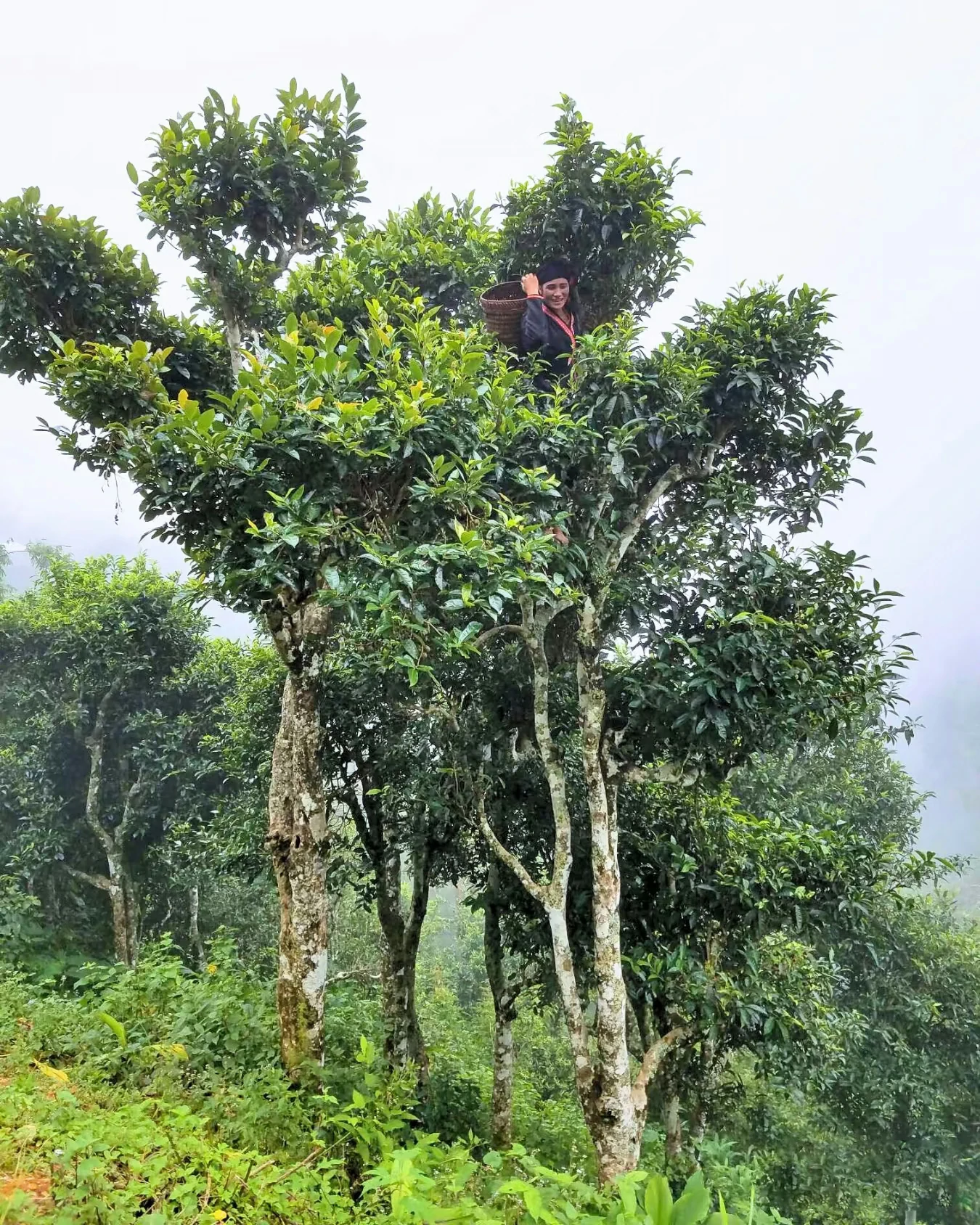
Forest-Grown Tea vs. Taidi tea: Which Brew Truly Cares for Your Health?

Forest Tea vs Taidi tea – Health Benefits, Farming Methods & Risks Not all tea is created equal. Beyond flavor and aroma, how your tea is grown directly impacts your health and the environment. The contrast between forest-grown tea (often from ancient or big trees) and Taidi tea (mass-farmed on plains and hillsides) reveals a story of

Forest-Grown Tea vs. Taidi tea: Which Brew Truly Cares for Your Health? Read More »

Shopping Cart